1. Introduction
How can climate change act as a threat multiplier of security dilemmas in the Barents Region?1 The reason for asking this research question is that Norway’s Arctic policy ‘High North, Low tension’ has been important in avoiding militarisation of the region. However, the European security landscape has changed dramatically, especially since the second Russian attack on Ukraine in 2022. Avoiding any kind of escalation of the war to include NATO, including in Northern Europe, remains a particular challenge. Within this framework, the Arctic is central to Norwegian security concerns, particularly due to the Russian border.2
As the Norwegian parliament emphasises in its recommendation to the Long-term Defence Plan for 2025–2036,3 ‘climate change is contributing to increased tension and expanded operational areas in the Arctic. The economic opportunities resulting from the melting of the sea ice in the Arctic make the area interesting for an increasing number of players.’4 As NATO emphasises, this may change the geopolitical environment and influence state behaviour.5
We understand climate change as changes in weather patterns and temperature over time.6 In the Arctic context, this entails warming up to four times faster than the global average.7 The northern Barents Sea is warming seven times faster.8 We focus on the consequences of ice melting, rising ocean temperatures, and thawing permafrost. Resources and maritime trade routes will become more accessible, enabling an increase in the risk of competition and confrontation.9 Additionally, climate change has a significant impact on the four million people living in the Arctic, underlining its diverse security implications.10 From an operational perspective, climate change impacts search and rescue (SAR) operations, oil spill protection, shipping traffic, and fishing activity. As such, the security risks of climate change in the Arctic are closely tied to territory.
The term ‘The Arctic’ can be defined according to ‘any number of scientific, environmental, geographical, political, and cultural perspectives and biases.’11 We rely on the definition provided by the Arctic Monitoring and Assessment Project. As the figure shows, the Arctic is broad. We focus on the Russo-Norwegian Arctic: the Barents Sea, Svalbard, the Kara Sea, and the western part of the Northeast Passage. We refer to this area as the Barents Region.
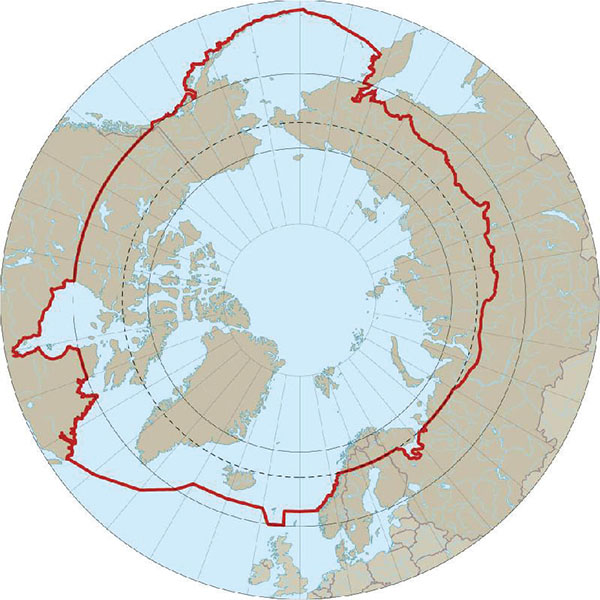
Figure 1. The figure shows the definition of the Arctic by the Arctic Monitoring and Assessment Programme, and was retrieved from the programme report Snow, Water, Ice and Permafrost in the Arctic (SWIPA).12
The Norwegian government has stood by its traditional goal of avoiding securitisation of the Arctic and Barents regions since the invasion of Ukraine in 2022, which has required stability and predictability in Norwegian policies,13 involving deterrence and reassurance towards Russia.14 Simultaneously, cooperation with Russia on, for instance, fishing arrangements and SAR, continues. These agreements contribute to preventing emerging security dilemmas in the Arctic amidst great power rivalry and a deteriorating international order. The former Norwegian Minister of Foreign Affairs, Anniken Huitfeldt, stated in March 2023 that ‘We monitor and protect our own areas, and depend on allied help. Furthermore, climate change makes cooperation in the High North central.’15
Traditionally, the Barents region has benefitted from a ‘special status’ in international politics. The last president of the Soviet Union, Mikhail Gorbachev, named it a ‘zone of peace’, and it has since been labelled ‘a place apart’.16 This phenomenon was popularised as Arctic exceptionalism. Despite international tensions, regional cooperation in the Arctic was possible. However, the Arctic is now being both militarised and securitised.17 This process lays the groundwork for emerging security dilemmas in both the Arctic and the Barents Region more specifically.18
We focus our article more narrowly on the Barents Region and in answering our research question, we draw our attention to the state actors in the region, their daily operations, and how and where they conduct their exercises in the area. By organising our arguments in such a way, we seek to identify how climate change may precipitate security dilemmas in the region. We are especially interested in analysing how climate change might affect the ability to distinguish between offensive and defensive postures, and secondly, how climate change affects the Barents region placement on the offensive-defence scale. By taking such a step-by-step approach, it will then be possible to determine how climate change is a threat multiplier in the region.
By conducting such an analysis, we aim to pave the way for filling an important gap in the research literature on security dilemmas, namely how the application of the renowned international relations scholar Robert Jervis’ approach on security dilemmas can help us understand the character of climate change as a threat multiplier in the Arctic and in the Barents region.19 The threat multiplier concept ‘has become a widely used term by scholars and practitioners to describe climate change implications for security in both the policy realm and climate security literature.’20 Robert Jervis offers the most suitable framework for doing this by introducing the notion of offensive and defensive strategies. Arctic exceptionalism has contributed to the defensive orientation of the Barents Region, but the breakdown of exceptionalism may shift the balance towards offence.
To answer our research question, we first review the literature on security dilemmas and Norwegian security in the Barents Region and position ourselves within the current research debate. Thereafter we describe our methodology and data sources. We then present the results of our data collection through the lens of three main categories: Arctic state actor interests, daily operations, and military exercises and operations. Finally, we analyse our findings through the lens of Jervis’ matrix of security dilemmas to elucidate how climate change functions as a threat multiplier in the Barents Region.
2. Theoretical Foundation
2.1. Security Dilemmas
Security dilemma theory posits that actions taken by states to enhance their security can make other states perceive themselves as less secure, leading them to initiate their own security-enhancing measures.21 One state’s gain in security is perceived as a threat to the security of another state. The ensuing spiral of armament thus causes an overall reduction in the security of all states involved.22 States can never be entirely certain of the current and future intentions of other states that are able to harm them.23 Due to misperceptions about these intentions, ‘states with fundamentally compatible goals may nonetheless end up in competition and war.’24
Robert Jervis shows that the security dilemma is particularly strong when it is challenging to distinguish between offensive and defensive forces, and when offensive strategies hold advantage over defensive strategies. Security dilemmas are thus affected by the offence-defence balance.25 Additionally, geography and military technology affect this balance.26 Technology may tilt the balance in favour of either strategy, while geography tends to favour defence due to distances and barriers to manoeuvres.27 Threats tend to travel more easily across short distances, and the speed with which they do is of particular importance in the military and political sectors.28 Within them, states tend to be far more concerned with the capabilities and intentions of their neighbours.’29
Assessing whether weapons are offensive or defensive is challenging. Johan Galtung proposed that if a weapon system can be used effectively abroad, not only at home, it is offensive.30 In his discussion of offence and defence, Quester points out that ‘mobility thus generally supports the offensive’.31 Ground and air forces, for instance, are considered offensive, for they are primed for attack. Naval forces, on the other hand, favour defence, as they are unattractive targets protected in bases. Strategic weapons, particularly nuclear weapons, are defensive in nature.32
The nature of military forces is challenging to assess, as it is usually subjective: ‘what seems sufficient to one state’s defence will seem, and will often be, offensive to its neighbours.’33 For instance, Russia presents its military build-up in the Barents Region as fundamentally defensive against what it considers a hostile NATO alliance. It is reasonable to expect that an Arctic build-up by any NATO member will be offensive from a Russian perspective.34 Thus, other political factors may weaken factors that alleviate the security dilemma. If the nature of military forces can be determined, a security-seeking state can alleviate the security dilemma by deploying purely defensive forces.35
Robert Jervis proposes four conditions that describe the risk of security dilemmas, based on favoured strategies and forces, and whether one can distinguish between them.36 The matrix is reproduced in the table below. For instance, the Arctic region, as a ‘zone of peace,’ is widely accepted to have been a ‘doubly safe’ region in which security dilemmas are unlikely to emerge. We argue this is changing, exacerbated by climate change.
| Offensive advantage | Defensive advantage | |
| Indistinguishability of posture | (1)
Doubly dangerous |
(2)
Security dilemma, but security requirements may be compatible |
| Distinguishability of posture | (3)
No security dilemma, but aggression possible. Status quo states may follow different strategies than aggressors. Warning given. |
(4)
Doubly safe |
2.2. The Barents Region in Jervis’ Matrix
The Barents Region finds itself at the cusp of a security dilemma tied to militarisation. If states do not strengthen military resources, other states could more easily exploit them. On the other hand, if states increase their military resources, neighbours may perceive this as a threat and militarise further.37
POSTURE. A key part of Russian military posture is the placement of eight SSBNs in the region. Further, the Russian Northern Fleet is stationed on the Kola Peninsula. It comprises submarines and surface vessels. Russian Arctic air forces consist of some 72 fighter jets and an unknown number of reconnaissance aircraft. Additionally, Russia has uncrewed aerial vehicle (UAV) capabilities at Severomorsk. The Kola Peninsula and three Arctic bases have S-300 and S-400 anti-air systems, anti-ship systems, surface-to-air systems, and coastal defence systems. The Northern Fleet is also responsible for some 20% of Russian peacetime precision strike capability, including the Kinzhal hypersonic ballistic missile.38
Norwegian forces in the Barents Region are limited. Brigade Nord (Northern Brigade), the core of the Norwegian Army, Finnmark Landforsvar (land-based defence forces), and the Sør-Varanger Garrison (military border patrol) are based north of the Arctic Circle, along with the Joint Headquarters in Bodø. The main Air Force base, hosting the Norwegian fighter jets, is located in Trøndelag in the Norwegian midlands.39 In other words, Norwegian military posture conveys limited threat to Russia.
It is rather NATO membership and alliance activities that account for Norway’s posture in the Barents Region. NATO conducts several large-scale exercises in the region, such as Cold Response. Nordic Response 2024 was the largest allied exercise in the Barents Region since the Cold War. In this context, the NATO membership of most Arctic states shore up Russian fears of a four-against-one scenario. Likewise, Russia’s military build-up could cause a security dilemma for NATO, fearing that they will be outnumbered by Russian troops in the region.40
It is important to note that in the security dilemma context, it is not intention, but rather perception that matters. The purported defensive nature of NATO and Russian postures in the Barents Region are of limited consequence when postures are often perceived as ambivalent at the policy level. For instance, Russia considers practically any activity in the Arctic by NATO allies a threat.41 Likewise, NATO members have warned of Russian militarisation in the Barents Region and the dual-use potential of Russian installations. Despite such warnings, postures appear relatively distinguishable in the Barents Region.
STRATEGY. The geographical features of the Barents Region favour defence. Cold temperatures, sea ice, and a lack of vegetation that can camouflage troop locations and movements are examples of natural features that render offensive strategies rather unattractive. While this article focuses on the maritime domain, land-based factors also contribute to the overall defensive orientation of the region.
There has been some debate as to the hegemonic nature of the Arctic. Some argue that Russia is the regional hegemon,42 while others assert that the region is multipolar.43 In the case of the narrower Barents Region, Russia is certainly the dominant power. For the purposes of this paper, we base our analysis on the assertion that Russia is the hegemon of the Barents Region at present. Hegemonic presence favours defensive strategies.
In sum, these factors place the Barents Region firmly in the fourth ‘doubly safe’ quadrant.
3. Norwegian Security in the Barents Region
Some present the Arctic as an area that ‘feels the burn of rising instability and competition,’44 others as one that is ‘likely to remain stable and mostly quiet in the short and medium term.’45 These perspectives naturally vary according to theoretical perspectives. Neo-realists tend to view the region as an area of more intense great power competition, while liberal scholars and social constructivists emphasise common interests, interdependencies, changing security identities, and norms.46 Neo-realists dominate popular writing and media accounts, emphasising the ‘race to the North Pole,’ but little empirical evidence underpins such a claim.47
From a Norwegian perspective, the priority is maintaining low tensions in the Arctic. The Arctic is central to Norway’s security considerations, particularly due to its land and sea border with Russia.48 Norway has actively pursued diplomatic efforts to ensure low tension in the Arctic,49 in line with the liberal approach to international relations. We base our analysis on the assumption that the above also holds true for Norway in the Barents Region.
Norway’s traditional reassurance policies towards Russia require clarifications after Russia’s attack on Ukraine and Finnish and Swedish accession to NATO. The functions of reassurance are summarised as crisis management, deterrence calibration, and conciliation. These efforts include measures like risk reduction and unintended incidents, taming the deterrence posture to maintain the status quo of low tension, and efforts to transform reassurance policies to include people-to-people contact, military cooperation, disarmament, and détente.’50 Almost half of the Artic region is Russian territory, so an overarching challenge is to develop a working relationship with Russia on regional issues, especially fighting climate change and mitigating security dilemmas.51
Climate change is transforming Arctic security, which might necessitate a new military architecture in the region.52 Kathrin Keil concludes that a geopolitical rush for Arctic resources is unlikely, despite climate change.53 The Arctic Military-Exercise (ArcMilEx) dataset shows that exercises have become more frequent in the Arctic since 2006. These exercises act as a barometer of both Arctic and non-Arctic states’ concerns about regional stability and security. Exercises range from one or two to four annually, in 2019, which Depledge labels ‘train where you expect to fight’.54 Pauline Baudu addresses how climate change acts as a catalyst of interests in the region, concluding that the Arctic ‘can be a test bed for NATO to advance its climate engagement,’ considering climate change a threat multiplier.55
A Norwegian perspective on how climate change can act as a threat multiplier and amplify emerging security dilemmas in the Arctic and the Barents Region is understudied. Indeed, due to Arctic exceptionalism, analysis of security dilemmas in the Arctic have been limited. This paper aims to fill this gap by adhering to a realist approach. We refrain from making unsubstantiated claims based on core realist insights, and instead only apply realism as a theoretical toolkit to analyse self-collected empirical insights based on qualitative interviews.
Climate change can act as a threat multiplier in international affairs, by ‘[multiplying] existing threats to security.’56 Climate change exercises an indirect effect on security, exacerbating pre-existing tensions, scarcities, and drivers of insecurity.57 Climate change might frame new risks ‘not from climate change per se, but from how it interacts with and aggravates other environmental, economic, social and political stressors that can threaten national stability.’58
Criticism has been levelled against the threat multiplier concept. Selby et al. (2017), for instance, criticise the concept using the Syrian civil war as a case study. They argue that the civil war, as an oft-used reference point, does not offer support for the threat multiplier concept.59 However, this study is based on a single case, and we find numerous scholars arguing in favour of the concept.60 Additionally, five out of six of our respondents agreed that climate change is a threat multiplier, while one disagreed (Respondent E).
When states pursue offensive strategies at the expense of more defensive ones, and distinguishing between offensive and defensive postures is difficult, Robert Jervis labels the situation ‘doubly dangerous’, for under such circumstances reactions to tension may increase the risk of conflict.61 Tensions rise when states move to secure their territory and assert sovereignty over it.62 Thus, a threat multiplier can increase the risk of conflict where climate change and security become more interlinked, a phenomenon that preoccupies policymakers and scholars alike.63
The crux of the matter, then, is (1) whether climate change makes it more difficult to distinguish offensive and defensive posture in the Barents Region, and (2) whether climate change shifts the offence-defence balance towards offensive strategies. If both are true, climate change effectively takes us from a ‘doubly safe’ to a ‘doubly dangerous’ situation.
Whether climate change acts as a threat multiplier in the Barents Region is mainly an empirical question, not determined by theoretical prerequisites. An analysis that investigates actor behaviour, their daily operations, and where they exercise can help us understand to what degree climate change acts as a threat multiplier in the Barents Region.
4. Method
This article relies on expert interviews as its main source of data. An expert interview is a ‘qualitative semi-structured or open interview with a person holding “expert knowledge”.’64 Such interviews do not rely on random sampling, but rather identification of relevant experts on the chosen topic. It can be a more efficient means of data collection that may also provide the researcher with recommendations of other relevant experts.65
Our respondents were not randomly selected. Rather, we sought out individuals with known expertise in national security in the Arctic. Our aim is to explore how Norwegian officials view the link between climate change and security issues. Therefore, we have interviewed a total of six experts, from the Norwegian Ministry of Defence (MoD), the Joint Headquarters (Joint HQ), the Norwegian Navy (RNoN), and the Norwegian Coast Guard (NoCG) to obtain perspectives from individuals involved with the Arctic in various capacities. Additionally, we spoke with two members of the International Staff at the NATO Headquarters in Brussels, who offered an Alliance perspective on Arctic security. The interviews were conducted in August and September of 2023.
Expert interviews offer three key advantages: Researchers can add specific knowledge to existing general knowledge, researchers may omit the inability to utilise experimental or statistical methods due to the (often) low number of observations, and expert interview data can provide a link between the ‘macro and micro levels of analysis.’66 Research on the Arctic abounds, but we seek to add regional knowledge to the broader Arctic scholarship. Our research is poorly positioned for quantitative research. Thus, expert interviews offer a means by which we can collect qualitative data for analysis.
We conducted semi-structured interviews, relying on a prepared interview guide that facilitated discussion, but also digression and reflection on the part of both the interviewer and the respondent. This design also allowed us to ask follow-up questions when necessary. While allowing for some variety, the interview guide assured that the interviews nevertheless did not stray from the topic at hand. The interview guide was divided into three main categories: Arctic state actor interests, daily operations, and military exercises and operations. These categories were selected to reflect the various tasks that are conducted by our respondents in the Arctic. To respect the respondents’ wishes to remain anonymous, the respondents will be labelled Respondent A through F when cited.
Our approach naturally faces constraints. First, we focus on a Norwegian perspective. Norway was ‘NATO in the North’ until Finland’s accession in 2023. Further, the country’s location between Russia and the North Atlantic, possession of Svalbard, and considerable maritime territories make the country an important Arctic actor. Nevertheless, Norway is a small state. Second, our sample size is limited. However, expert interviews do not rely on high statistical power, but on the relative expertise of the respondents. Several of our respondents work directly with the Arctic and are thus well positioned to reflect on the impacts of climate change on regional security.
To strengthen the credibility of our data, we conduct a data triangulation, a method that utilises multiple data sources to achieve more precise and valid findings.67 We are thus able to cross-reference our experts’ statements with policy documents and other research findings. Conversely, our respondents may also supplement or elaborate on the contents of policy documents.68
5. Description of Interview Results
The effects of climate change can already be observed in the maritime domain in the Barents Region (Respondent A–D, F). Melting sea ice renders the region more accessible to both fishing and transportation, resulting in increased maritime activity. The warming ocean attracts new species of fish, a resource whose value is projected to increase as other oceans are adversely affected by climate change.69 Likewise, extant Arctic fish populations, especially cod, may become more patchy due to changes in ice cover, temperature, and salinity.70 A survey from 2009 suggests that 30% of the world’s undiscovered gas and 13% petroleum resources are located in the Arctic.71 Interest is also increasingly being expressed in the mineral resources in the Arctic, many of which are key to new and emerging technologies.72 Additionally, the melting sea ice weakens the natural defences of the Russian northern coastline. These examples illustrate the many ways in which the Arctic region will be affected by climate change, making climate change an important factor in the region’s future security landscape, also precipitating increased interest from numerous state actors.
The Barents Region is currently in a state of competition, rather than peace (Respondent A). NATO’s 2022 Strategic Concept explicitly stated that ‘The Euro-Atlantic area is not at peace.’73 However, climate change is not perceived as the primary cause of this competition. The effects of the war in Ukraine overshadow the immediate impacts of climate change on the state of security in the Barents Region (Respondent A, C). This observation is illustrative of the challenge of analysing the security implications of climate change—they do not necessarily directly affect security threats and risks. Nevertheless, in the long term, our respondents view climate change as a salient threat multiplier, especially concerning the status and operation of the Svalbard archipelago. Increased fishing activity is another important way in which climate change will multiply existing threats. Ocean warming will precipitate the migration of fish towards the Arctic, accompanied by less favourable conditions in other oceans. This will increase interest in fishing in the Arctic.
5.1. Arctic State Actor Interests
Several state actors are active in the Barents Region, most prominently the state members of the Arctic Council, China, the United Kingdom, France, and Germany. Our respondents expect increased activity from several state actors, such as Germany, India, and South Korea (Respondent A, B, D). Human activity follows the ice cap as it recedes, meaning that the areas north of Svalbard present a new frontier to these actors (Respondent B). The organisations NATO, the EU, and the Arctic Council are not state actors, yet they play an important role in shaping the behaviour of states in the Arctic. We therefore also consider their impact.
China has defined itself as a “near-Arctic state,”74 and Chinese activity in the Arctic has increased (Respondent F). While our respondents expect a maintained interest from China, one respondent dissented, claiming Chinese engagement in the region would be ‘a mess [sic]’ for them (Respondent E). France has published two Arctic strategy papers presenting different views on the Arctic.75 While acknowledging the Arctic as a region of cooperation, the French Ministry of Foreign Affairs stresses French shipping interests in the region.76 Moreover, in their strategy document, the French Ministry of Defence characterises the Arctic as a region of ‘growing strategic interest’ that may become ‘an area of confrontation’.77
Germany, on the other hand, does not emphasise Arctic hard security issues. Nonetheless, the German Arctic Policy Guidelines acknowledge that the ‘potential for non-cooperative behaviour’ risks affecting German interests in the region. Wegge (2020) assesses that Germany seeks to engage with their Arctic concerns through its alliances rather than individually.78 German interest in the Arctic is expected to increase after imports of Russian gas plummeted since the Russian invasion of Ukraine in 2022 (Respondent A, C). One respondent highlighted German revitalisation of their abilities to travel further north than previously (Respondent E).
The whole Arctic region has benefitted from the stability and pragmatism of regional relations for decades. This is particularly evident in the tradition of trans-border cooperation in the Barents Region. Our respondents asserted that this situation is unlikely to change dramatically. While the war in Ukraine has certainly affected states’ views on one another on the international stage as well as in the Arctic, this is unlikely to spill over to the Barents Region in a dramatic fashion (Respondent A). It is in the interest of Norway that the Barents Region, and the whole Arctic, remain accessible to everyone (Respondent B).
The above issues are closely related to the global trend of increasing great power rivalry. From the perspective of the Norwegian Armed Forces, the great power rivalry itself does not currently have a strong impact. Rather, tensions arising from the war in Ukraine cause friction, also in the Arctic. This has manifested itself in the form of more military exercises and a visit from the world’s largest aircraft carrier, the USS Gerald R. Ford (Respondent A).79
According to one respondent, Russian maritime capabilities in the Barents Region are outdated, incentivising Russia to pursue stable conditions in the Arctic (Respondent A). In such a situation, China and Western states increasing regional tensions is diametrically opposed to Russian interests. Research shows that Russian land, sea, and air capabilities in the region were modernised and expanded prior to 2022.80 Since then, land forces have been reduced by some 80 percent due to the war in Ukraine.81 The Norwegian Intelligence Service concurs, finding that Russia’s ability to affect Arctic politics is weakened and that Russia’s dependency on China will be further entrenched.82 It is our interpretation that the respondent referred to these considerations. Despite these tensions, the NoCG aims to be ‘a deescalating actor in the Arctic’, acting ‘according to law no matter who is fishing up there [sic]’ (Respondent B). These views suggest that climate change has not yet significantly impacted the way in which states present in the Arctic or Barents Region view one another.
Figure 2 illustrates the extent of ice melting that has occurred in the Arctic between 1980 and 2020.83 First, it is apparent that most of the melting occurs towards the Eurasian side, where the ice is thinner due to the Gulf Stream. This weakens the natural protection of the Russian northern coast. Second, the increased accessibility of the Northeast Passage and the Northern Sea Route are evident. The latter factor is of particular interest to a variety of state actors, Arctic and non-Arctic alike.
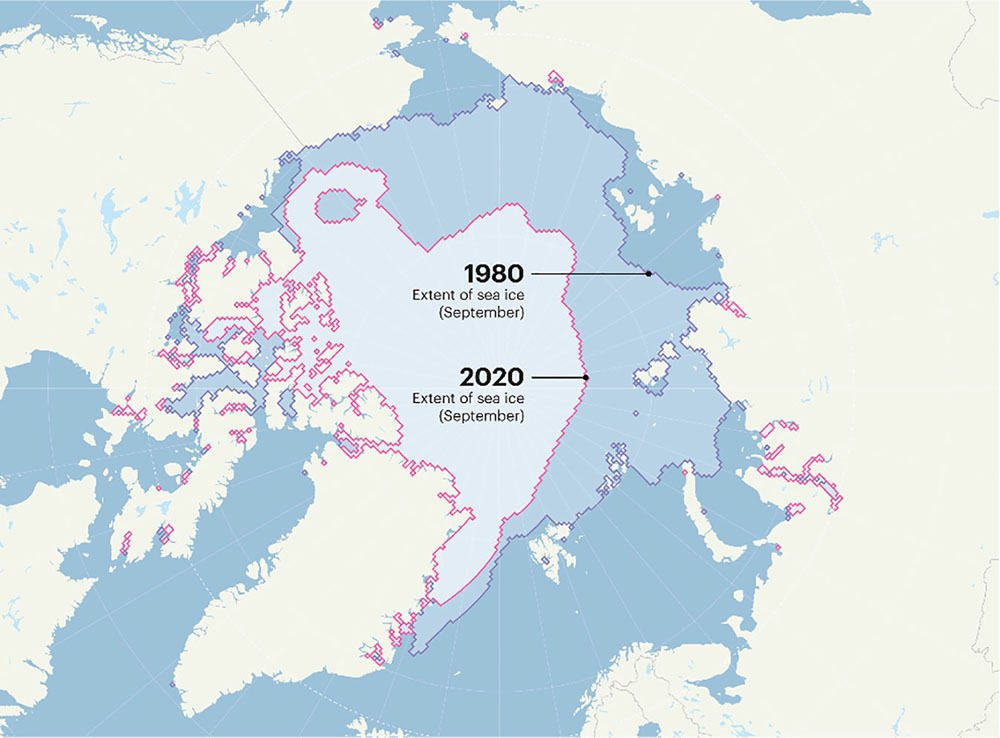
Figure 2. The extent of sea ice in the Arctic is at its lowest in September. Due to climate change, the extent of sea ice in September has shrunk considerably during the past decades. Retrieved from the report of the Norwegian Defence Commission of 2021.
5.2. Daily Operations
Norwegian daily operations in the Barents Region primarily comprise SAR, assertion of sovereignty, oil spill preparedness, and inspection of fishing vessels (Respondent B, C). Respondents stressed that Norway has so far not changed its patterns of operations in the region. However, they also emphasised that in the future, Norway will have to ‘look at the islands [Bear Island, Hopen, Jan Mayen and Svalbard] in another way, but we are not planning for climate change’ (Respondent A). SAR will be the daily operation most affected by climate change (Respondent B, C). Climate change will render new maritime areas accessible to both commercial, research, and military activity. In addition, they tend to be poorly charted, or even altogether uncharted. The increased traffic in these areas will likely increase accident rates, in turn increasing the NoCG’s SAR-related workload.
It is not merely the number of ships and actors present in the Barents Region that will challenge the NoCG, but also the cold-weather experience of the ships and personnel. Many ships are poorly prepared for regional conditions. As one respondent said, ‘If you do not have experience with sailing in the Arctic, you have no business being there’ (Respondent B). Moreover, increased commercial activity from additional states will likely precipitate an increase in military activity. In such a situation, the NoCG aims to be a neutral and apolitical actor, independent of what actors are present (Respondent B).
Respondents also mentioned the role of Norwegian islands in the Arctic in the context of daily operations. The geostrategic role of Norwegian islands will be altered as climate change causes a reduction in sea ice and more open sea in which to sail. Today, these islands ‘lie with their backs against the ice. When these areas become more manoeuvrable, the ocean’s geostrategic conditions will change dramatically’ (Respondent A).
The daily operations of Russia will undoubtedly be affected by climate change. In several ways, Russian operations in the Barents Region are already affected (Respondent F). Russia has been reluctant to connect climate change and security, yet the 2022 Maritime Doctrine for the Russian Federation lists climate change as one of the primary threats against Russian maritime activities due to the increase in natural disasters.84 President Vladimir Putin outlines three major threats emanating from climate change: thawing permafrost, desertification, and increased occurrence of natural disasters. This is a stark contrast to the strategy from 2015, which only mentioned climate change once, encouraging more scientific research on the issue.85
Russia has expanded its network of bases and military infrastructure in the Barents Region. This involves construction of new bases and the reopening of decommissioned bases as well as the development of new weapons systems.86 The stated primary purpose of these bases is SAR, but analysts and researchers warn against their dual-use potential.87 As interest in and access to Arctic maritime areas increase, Russia must manage an ever-growing area, which has pulled Russian attention both North and East (Respondent D–F).
The base infrastructure will be affected by climate change. For instance, thawing ground frost may render airstrips unusable parts of the year (Respondent A). Additionally, the network of bases is vulnerable to natural disasters, as previously asserted by President Putin. These challenges are not unique to Russia in the Barents Region—all states in the region face these challenges.
Russia possesses a fleet of seven nuclear-powered icebreaker ships, with four more to be launched by 2029.88 In addition, a super-icebreaker of the LK-110 class is expected to be launched by 2027.89 This is interpreted as a perceived Russian need for increased patrolling and presence (Respondent B–D). Maintaining year-round access to the Northern Sea Route is an important motivation for Russian icebreaker construction.90
5.3. Military Exercises and Operations
Norway was known as ‘NATO in the north,’ until Finland and Sweden’s accession to NATO. In general, climate change forces the attention on armed forces further north (Respondent A). In this context, military exercises will be affected by climate change (Respondent F).
Norway hosts two important multinational exercises: Cold Response, a biennial NATO cold weather operations exercise, and Joint Viking, a biennial exercise to which several NATO and Partnership for Peace nations are invited. Norway, Sweden, and Finland have conducted the biennial aerial Arctic Challenge Exercise since 2013 as a part of the Nordic Defence Cooperation (NORDEFCO). Norway participates in the bilateral Barents SAR exercise with Russia. However, Norway cancelled Barents 2022 because of the Russian invasion of Ukraine.91 No Barents exercise has since taken place.
Our respondents highlighted better access to maritime areas in the Barents Region as a key factor impacting military exercises in the region (Respondent D, F). As the ice retreats and new areas become accessible, a need to exercise in those areas arises (Respondent A). This affects both Russia and Norway, as well as the allies and partners of both. The Barents Region has been an attractive location for particularly cold weather exercises such as Cold Response. Climate change will result in winters that are short and wet, rather than cold and dry, as they have traditionally been.92 Because of this, military forces will likely face a need to alter the way in which they exercise in the region. Operational concepts will necessarily have to be updated accordingly in such a case.
The Barents Region has benefitted from the stability and pragmatism of Arctic Exceptionalism for decades. While the war in Ukraine has certainly affected various states’ views on one another on the international stage, including in the Arctic, this is unlikely to spill over to the region in a dramatic fashion (Respondent B, C). Rather, it is in the interest of Norway that the Barents Region remains accessible to everyone.
6. Analysis of How Climate Change Affects Security Dilemmas
To answer our research question, we will discuss two main factors that affect our research question: how climate change affects the two dimensions of Jervis’ matrix and to what extent climate change acts as a threat multiplier.
The first dimension of Jervis’ security dilemma matrix is whether it is possible to distinguish between offensive and defensive postures. We have argued that the Arctic quite clearly finds itself in the fourth quadrant, in which it is possible to make such a distinction. Furthermore, we argue that climate change does not seem to impact this factor in either direction. If there is an effect, it is of insufficient magnitude to alter this state. The second dimension of Jervis’ matrix is the extent to which offensive or defensive strategies are favoured. If offensive and defensive strategies in the Arctic become indistinguishable and climate change renders the Arctic offensively oriented, the Arctic will shift from its current ‘doubly safe’ situation to a ‘doubly dangerous’ one.
6.1. Climate Change and Posture Distinguishability
The Barents Region has been a “doubly safe” region, meaning that it is possible to distinguish offensive and defensive postures. The nature, numbers, and location of forces do not seem to suggest they are poised for offensive use. Strategic weapons further underline this, for they are defensive in nature. The Norwegian Joint HQ is in the Barents Region along with the bulk of the Norwegian Army. They are, however, far from Finnmark, the Norwegian county bordering Russia. The Naval HQ and main combat aircraft airfield are both located far away from the Barents Region.
Since the Russian invasion of Georgia in 2008, bilateral relations between Russia and Norway have deteriorated progressively, reaching an all-time low after 2022. This has increased tensions in the Barents Region and precipitated what appears as a blurring of the nature of Russian and Norwegian postures in the region. However, we do not find a significant impact of climate change on this trend.
We find indications that this may change as the effects of climate change become more prominent. Intelligence services have warned of the dual-use potential of Russian military installations in the Barents Region as Russia prepares for increased maritime activity. While this may enhance the offensive potential of Russian capabilities, climate change will also likely make mobility on land and in the air more difficult through its adverse effects on infrastructure. This may push the Barents Region in a more defensively oriented direction. As such, climate change is unlikely to preclude posture distinguishability.
6.2. Climate Change and Regional Placement on the Offence-Defence Scale
The Barents Region, and indeed the entirety of the Arctic, currently favours defensive strategies. The cold, harsh climate of the region, the geographical features of the landscape, and the weapon systems and capabilities present render offensive strategies less attractive.93 The regional defensive orientation is not solely due to the natural features of the region, but also technological factors. Certain weapons are intended for first strike, whilst others are intended for second strike. First strike weapons, such as missiles and air forces, are considered offensive in nature. Maritime forces, protected by their bases, are considered by Jervis as more defence oriented.94
Russian ground forces have been reduced by up to 80% due to the war in Ukraine, but air and naval forces remain largely intact.95 The former two are considered offensive forces, whereas the latter favours defence. Climate change affects the impact of these forces on the offence-defence balance. For instance, Arctic warming can render runways unusable parts of the year, weakening the offensive potential of air forces.96 Likewise, permafrost thawing and milder winters risk incapacitating the offensive potential of weapon platforms through the adverse effect it has on both military and civilian infrastructure.97 Moving or mobilising troops and weapon systems becomes difficult when damaged infrastructure precludes movement. Conversely, more accessible sea may leave naval forces more active, decreasing the defensive posture of these forces. We find no clear impact of climate change on strategic weapons in the region.
In the future, climate change will render the situation rather different. Greater maritime accessibility in the Barents Region, increased militarisation and securitisation, and deteriorating diplomatic relations may make offensive strategies more attractive. Conversely, poorer conditions on land, Russian ground troop reductions, the still-present Russian strategic weapons, and the fact that the credibility of Russian military power has suffered a major blow are clear defensive factors. Climate change affects several of these factors, albeit not all.
This does not suggest that the region will move from a clearly offensive to a clearly defensive orientation, but rather that the region will approach a situation closer to balance between the two, in part due to climate change. In other words, only one of our criteria are met in some way. This moves the Arctic from the ‘doubly safe’ fourth category towards the third category, in which a security dilemma is possible, but not necessarily definite.98 In this way, climate change acts as a threat multiplier that opens the Arctic to emerging security dilemmas that have previously been almost unthinkable due to the clear defensive orientation of the region.
The properties of the Arctic region have hitherto placed it firmly in the fourth ‘doubly safe’ quadrant because they favour defensive strategies and enable actors to distinguish between offensive and defensive posture. In the future, climate change will affect the Arctic regional placement on the offence-defence scale in such a way that the region may shift to the less secure condition third quadrant, in which a security dilemma is possible.99
6.3. To What Extent Does Climate Change Act as a Threat Multiplier in the Barents Region?
We propose that climate change, acting as a threat multiplier, primarily affects the security dilemma through its impact on the offence-defence balance. This means that climate change may affect whether the Barents Region will favour offensive or defensive strategies in the future. Robert Jervis argues that security dilemmas are at their most intense when offensive strategies are favoured, and ‘commitments, strategy, or technology dictate that the only route to security lies through expansion.’100 If climate change acts as a threat multiplier, a state’s reaction to aggravated international tension increases the chances of conflict. This will undermine the long-standing Norwegian aim of maintaining low tension in the Arctic.
Several factors suggest that climate change acts as a threat multiplier in the Arctic. The receding ice cap is the most important factor and a major challenge for Russia, which will lose its buffer against North America as climate change makes access across the Arctic Ocean easier. The Norwegian islands of Bjørnøya, Hopen, Jan Mayen, and the Svalbard archipelago will become islands in a more navigable sea, which will influence daily operations in the Barents Region. It will also influence the areas in which military exercises and operations can be conducted. A recent example is the visit of the supercarrier USS Gerald R. Ford to Oslo in May 2023 as part of enhanced US–Norwegian military cooperation.
However, there are several other factors that act as threat multipliers in the Barents Region. Most prominent is the war in Ukraine. As one of our respondents said, ‘Russia aims to keep the war in Ukraine as isolated as possible. They have not taken steps that would have provoked increased Western activity in the vicinity of the Russian naval bases on the Kola Peninsula’. In a similar vein, it was pointed out that Chinese interest in the Arctic region can aid in the mitigation of security threats. Russia wishes to avoid Sino-Western tensions on the Russian northern doorstep. Likewise, China’s entrance into the Arctic has stirred fears amongst several Arctic states, contributing to tensions in the region.101 Northern Norway has been subject to considerable hybrid activities, especially from Russia.102 While many of these factors are affected by and themselves affect climate change, it is clear that climate change is far from the only threat multiplier in the Barents Region.
But climate change is indeed taking place. The Norwegian Defence Commission of 2021 devoted an entire chapter to the security consequences of climate change in their report. Their report asserts that the warming taking place on Svalbard is six times higher than the global average temperature rise.103 Consequently, the glaciers are melting faster than before and may lead to sea level rise. Research also shows that the melting of the Greenland ice sheet will contribute to sea level rise in the region.104 Furthermore, the report states that permafrost is thawing at a high rate and snow and landslides will increase. In sum, this will present Norwegian authorities with many demanding issues in the future.
Our respondents agreed with the Defence Commission but added that increased traffic in the area will challenge SAR operations and oil spill preparedness due to increased traffic in the area. The area North of Svalbard ‘is the last frontier,’ due to the increased accessibility of the surrounding area. This will make the area even more vulnerable. The cessation of the Barents Rescue exercise is an example of how climate change acts like a threat multiplier, making all parties more vulnerable. Fewer meeting points between state parties might make offensive strategies prevalent since the war in Ukraine makes cooperation with Russia in the Arctic impossible on several issues. What will mitigate the prevalence of offensive strategies is the Nordic countries’ long experience in dealing with Russia, as also seen under the Cold War, but also when it comes to risks in dealing with Russian military activity in the area.105 However, we do not underestimate the possibilities for climate change to become an important threat multiplier. Long experience with handling Russian activities daily is an important mitigation strategy in this regard.
Conclusions
In this paper, we have studied climate security in the Barents Region from a Realist perspective. The aim has been to broaden the approach to studying how climate change can amplify emerging security dilemmas in the area. Until today, the Barents Region has been different from other geopolitical hotspots in Europe and beyond, protecting the region from being detrimentally affected by global tensions. Despite such tensions rising, regional cooperation continues. We therefore find that the Barents Region will likely remain stable and relatively quiet in the short, and possibly medium, term.
In the Barents Region, we suggest that climate change acts as a threat multiplier, affecting whether the region favours offensive or defensive strategies. We find no indication that climate change affects states’ ability to distinguish between offensive and defensive postures in the Barents Region. Climate change is not poised to tilt the Barents Region in favour of offensive strategies, but rather towards an offence-defence balance. Geographical, climatic, and geopolitical factors have, until now, primarily made the entirety of the Arctic region defensive in nature. Going forward, climate change will likely push the Barents Region closer to a state of balance between offensive and defensive strategies. We have found no indication that climate change will have a significant impact on states’ postures. This does not result in a security dilemma, which occurs in Jervis’ first and second quadrants. Rather, the region may approach the unsure situation of the third quadrant, which may, in turn, develop into a security dilemma.
Our conclusions are therefore more in line with liberal scholars and social constructivists who emphasise common interests, interdependencies, changing security identities, and norms in the Barents Region. As our interviews illustrate, Russia seeks to keep the war in Ukraine as isolated as possible. Russia furthermore has no interest in escalating tensions in the Barents Region. The Barents Region is an area of vital importance in Russia’s maritime doctrine, which allows for the use of military means to safeguard Russian interests.
Our findings show that there is no increased or intensified security dilemma currently in force in the Barents Region. Nevertheless, climate change has significant impacts in the region, which may change the status quo in the medium to long term. We show that climate change acts as a threat multiplier by eroding the ‘Arctic Exceptionalism’ that has made the Arctic and Barents Region ‘a place apart’, in turn paving the way for emerging security dilemmas in the region. Therefore, instead of exacerbating a regional security dilemma, climate change will likely precipitate one.
This effect will be somewhat proportional to the effect of climate change in the Barents Region. A warmer climate around Svalbard will inevitably change the archipelago’s physical conditions through thawing permafrost, soil erosion, and marine environmental degradation.
NATO’s emphasis on climate change as a security threat epitomises the growing need to incorporate climate change in future military planning, including in the Arctic. This might nonetheless initiate a process of securitisation of the Arctic which might be detrimental to Norway’s ability to take care of its own security in the area. There is therefore a growing need for continued research on this topic, including how climate change can securitise Norway’s relations with other state-actors in the Arctic.
Acknowledgements
We are grateful to the Norwegian Ministry of Defence, the Norwegian Joint Headquarters, the Royal Norwegian Navy, the Norwegian Coast Guard, and the International Staff at the NATO Headquarters in Brussels for their time and their expertise during the interviews for this article.
Footnotes
- 1 A short version of this article was presented as an extended abstract at the conference Climate Change & Security organised by NATO’s Center for Maritime Research & Experimentation in Lerici, Italy on 3 – 5 October 2023. More information about the conference can be found here: https://www.climatechangesecurity.org/
- 2 A. Østhagen, “Norway’s Arctic policy: still high North, low tension?,” The Polar Journal 11, no. 1 (2021): 77.
- 3 Forsvarsløftet – for Norges trygghet Langtidsplan for forsvarssektoren 2025–2036, (2023–2024), p. 8.
- 4 Innstilling til Stortinget fra utenriks- og forsvarskomiteen, (2023–2024), p. 1.
- 5 NATO, NATO Climate Change and Security Impact Assessment, NATO (Brussels, 2024): 6–8.
- 6 IPCC, Summary for Policymakers, International Panel on Climate Change (Cambridge & New York, 2022).
- 7 M. Rantanen et al., “The Arctic has warmed nearly four times faster than the globe since 1979,” Communications Earth & Environment 3 (2022): 2.
- 8 K. Isaksen et al., “Exceptional warming over the Barents area,” Scientific Reports 12, no. 1 (2022).
- 9 K. Keil, “The Arctic: A New Region of Conflict? The Case of Oil and Gas,” Cooperation and conflict 49, no. 2 (2014): 162–63.
- 10 NATO, Climate Change and Security Action Plan, NATO (Brussels, 21 June 2021), p. 1.
- 11 K. Dodds and M. Nuttall, The Arctic, What Everyone Needs to Know, (Oxford University Press, 2019): 4.
- 12 AMAP, Snow, Water, Ice and Permafrost in the Arctic (SWIPA), The Arctic Monitoring and Assessment Programme (2017): 4.
- 13 A. Huitfeldt, “Foreign policy statement to the Norwegian parliament,” news release, 21 March 2023, https://www.regjeringen.no/no/aktuelt/utenrikspolitisk-redegjorelse-2023/id2967341/.
- 14 I. N. Bjur, “The dual ‘dual’ policy: Two conceptions of ‘deterrence and reassurance’ in Norwegian security policy and analyses,” Journal of Strategic Studies 47, no. 3 (2024): 387–88.
- 15 Huitfeldt, “Foreign policy statement to the Norwegian parliament.”
- 16 D. Depledge, “Train Where You Expect to Fight: Why Military Exercises Have Increased in the High North,” Scandinavian Journal of Military Studies 3, no. 1 (2020): 290; M. Gorbachev, The Speech in Murmansk: At the ceremonial meeting on the occasion of the presentation of the Order of Lenin and the Gold Star Medal to the city of Murmansk (Novosti Press Agency Publishing House, 1987).
- 17 J. Kjellén, “The Russian Northern Fleet and the (Re)militarisation of the Arctic,” Arctic Review on Law and Politics 13 (2022): 35.
- 18 K. Åtland, “Interstate Relations in the Arctic: An Emerging Security Dilemma?,” Comparative Strategy 33, no. 2 (2014): 161–62.
- 19 R. Jervis, “Cooperation Under the Security Dilemma,” World Politics 30, no. 2 (1978): 169–70.
- 20 S. Goodman and P. Baudu, Climate Change as a “Threat Multiplier”: History, Uses and Future of the Concept, Center of Climate & Security (2023): 1.
- 21 Jervis, “Cooperation Under the Security Dilemma,” p. 169.
- 22 G. H Snyder, “The Security Dilemma in Alliance Politics,” World Politics 36, no. 4 (1984): 461.
- 23 K. Booth and N. Wheeler, “Rethinking the Security Dilemma,” in Security Studies: An Introduction, ed. P. D. Williams (Taylor & Francis, 2008), 132–33.
- 24 S. G. Jones, “The European Union and the Security Dilemma,” Security Studies 12, no. 3 (2003): 117.
- 25 Jervis, “Cooperation Under the Security Dilemma,” p. 187.
- 26 Ibid, p. 194.
- 27 C. L. Glaser, “What is the Offense-Defense Balance and Can We Measure it?,” International Security 22, no. 4 (1998): 61–66.
- 28 B. Buzan and O. Wæver, Regions and Powers: The Structure of International Security (Cambridge University Press, 2003), 12.
- 29 A. L. Friedberg, “Ripe for Rivalry: Prospects for Peace in a Multipolar Asia,” International Security 18, no. 3 (1993): 5.
- 30 J. Galtung, “Transarmament: From Offensive to Defensive Defense,” Journal of Peace Research 21, no. 2 (1984): 128.
- 31 G. H. Quester, Offense and Defense in the International System, 2002 ed. (Transaction Publishers, 2003), 3.
- 32 M. Nilsson, “Offense—Defense Balance, War Duration, and the Security Dilemma,” The Journal of Conflict Resolution 56, no. 3 (2012): 471.
- 33 B. A. Posen, “The security dilemma and ethnic conflict,” Survival 35, no. 1 (1993): 28.
- 34 J. Wilhelmsen and A. R. Hjerman, “Russian Certainty of NATO Hostility: Repercussions in the Arctic,” Arctic Review on Law and Politics 13 (2022): 115.
- 35 C. L. Glaser, “The Security Dilemma Revisited,” World Politics 50, no. 1 (1997): 186.
- 36 Jervis, “Cooperation Under the Security Dilemma,” p. 211.
- 37 Åtland, “Interstate Relations in the Arctic: An Emerging Security Dilemma?,” pp. 161–62.
- 38 C. Wall and N. Wegge, The Russian Arctic Threat: Consequences of the Ukraine War, Center for Strategic & International Studies (2023), 4–6.
- 39 “Tenestestader,” The Norwegian Armed Forces, Retrieved 14 August 2024. https://www.forsvaret.no/om-forsvaret/tjenestesteder.
- 40 M. Byers and N. Covey, “Arctic SAR and the “security dilemma”,” International Journal 74, no. 4 (2019): 507.
- 41 Wilhelmsen and Hjerman, “Russian Certainty of NATO Hostility: Repercussions in the Arctic,” p. 132.
- 42 e.g. A. Charron, J. Plouffe, and S. Roussel, “The Russian Arctic hegemon: Foreign policy implications for Canada,” Canadian Foreign Policy Journal 18, no. 1 (2012); A. Østhagen, “The Arctic security region: misconceptions and contradictions,” Polar Geography 44, no. 1 (2021).
- 43 e.g. N. Wegge, “The political order in the Arctic: power structures, regimes and influence,” Polar Record 47, no. 2 (2010).
- 44 “The EU’s geopolitical awakening in the Arctic,” Security & Defense, European Policy Centre, 11 April 2022. Retrieved 10 September 2023. https://www.epc.eu/en/Publications/The-EUs-geopolitical-awakening-in-the-Arctic~47c318.
- 45 J. I. Bekkevold and P. S. Hilde, “Europe’s Northern Flank Is More Stable Than You Think,” Foreign Policy (28 July 2023).Retrieved 8 August 2023, https://foreignpolicy.com/2023/07/28/arctic-nato-russia-china-finland-sweden-norway-northern-europe-defense-security-geopolitics-energy/.
- 46 Keil, “The Arctic: A New Region of Conflict? The Case of Oil and Gas.”
- 47 B. Steinveg, Arctic Governance Through Conferencing. Actors, Agendas and Arenas (Springer, 2023), 4.
- 48 e.g. T. Heier and A. Kjølberg, eds., Norge og Russland. Sikkerhetspolitiske utfordringer i nordområdene (Universitetsforlaget, 2015); J. A. Olsen, ed., Security in Northern Europe. Deterrence, Defence and Dialogue (Royal United Services Institute, 2018).
- 49 A. Østhagen, ”Ine Eriksen Søreide: nordområdene, USA og balansekunst,” Internasjonal Politikk 81, no. 1 (2023): 61.
- 50 Bjur, “The dual ‘dual’ policy: Two conceptions of ‘deterrence and reassurance’ in Norwegian security policy and analyses,” p. 388.
- 51 B. O. Knutsen and E. Pettersen, “War in Europe, but still low tension in the High North? An analysis of Norwegian mitigation strategies,” Arctic Review on Law and Politics 15 (2024): 26.
- 52 “New military security architecture needed in the Arctic,” Chatham House, 4 May 2021. Retrieved 10 September 2023. https://www.chathamhouse.org/2021/05/new-military-security-architecture-needed-arctic.
- 53 Keil, “The Arctic: A New Region of Conflict? The Case of Oil and Gas,” pp. 161–-62.
- 54 Depledge, “Train Where You Expect to Fight: Why Military Exercises Have Increased in the High North,” p. 280.
- 55 “Navigating Melting Ice and Eroding Exceptionalism: Theory-Driven Policy Pathways for NATO’s High North Commitment,” Institut de relations internastionales et strategiques, 22 July 2022. Retrieved 5 September 2023. https://www.iris-france.org/168952-navigating-melting-ice-and-eroding-exceptionalism-theory-driven-policy-pathways-for-natos-high-north-commitment/.
- 56 Goodman and Baudu, Climate Change as a “Threat Multiplier”: History, Uses and Future of the Concept, p. 5.
- 57 C. E. Werrell and F. Femia, “Climate Change as Threat Multiplier: Understanding the Broader Nature of the Risk,” (The Center for Climate and Security, 12 February 2015), p. 2.
- 58 Goodman and Baudu, Climate Change as a “Threat Multiplier”: History, Uses and Future of the Concept, pp. 5–6.
- 59 J. Selby et al., “Climate change and the Syrian civil war revisited,” Political Geography 60 (2017).
- 60 e.g. A. Below, “Climate change: The existential threat multiplier,” in Understanding new security threats, ed. M. Gueldry, G. Gokcek, and L. Hebron (Routledge); Werrell and Femia, “Climate Change as Threat Multiplier: Understanding the Broader Nature of the Risk.”
- 61 Jervis, “Cooperation Under the Security Dilemma,” p. 188.
- 62 H. C. Dyer, “Security Politics and Climate Change: the new security dilemma,” in Traditions and Trends in Global Environmental Politics: International Relations and the Earth, eds. O. Corry and H. Stevenson, Routledge Research in Global Environmental Governance (Routledge, 2017), 21.
- 63 T. Ide, “Rise or Recede? How Climate Disasters Affect Armed Conflict Intensity,” International Security 47, no. 4 (2023): 51.
- 64 L. Van Audenhove and K. Donders, “Talking to People III: Expert Interviews and Elite Interviews,” in The Palgrave Handbook of Methods for Media Policy Research, eds. H. Van den Bulck et al. (Palgrave Macmillan, Cham, 2019), 179.
- 65 A. Bogner, B. Littig, and W. Menz, “Introduction: Expert Interviews — An Introduction to a New Methodological Debate,” in Interviewing Experts. Research Methods Series, eds. A. Bogner, B. Littig, and W. Menz (Palgrave Macmillan, 2009), 2.
- 66 C. von Soest, “Why Do We Speak to Experts? Reviving the Strength of the Expert Interview Method,” Perspectives on Politics 21, no. 1 (2023): 277–78.
- 67 H. Noble and J. Smith, “Issues of Validity and Reliability in Qualitative Research,” Evidence-Based Nursing 18, no. 2 (2015): 35.
- 68 A. Bans-Akutey and B. M. Tiimub, “Triangulation in Research,” Academia Letters (2021), 3.
- 69 L. V. Weatherdon et al., “Projected Scenarios for Coastal First Nations’ Fisheries Catch Potential under Climate Change: Management Challenges and Opportunities,” PLOS ONE 11, no. 1 (2016): 21.
- 70 F.J. Mueter et al., “Possible future scenarios in the gateways to the Arctic for Subarctic and Arctic marine systems: II. prey resources, food webs, fish, and fisheries,” ICES Journal of Marine Science 78, no. 9 (2021): 3035.
- 71 D. L. Gautier et al., “Assessment of Undiscovered Oil and Gas in the Arctic,” Science 324, no. 5931 (2009): 1175.
- 72 R. Boyd et al., Mineral Resources in the Arctic: An Introduction, Geological Survey of Norway (Trondheim, 2016), 66.
- 73 NATO, NATO 2022 Strategic Concept, p. 3 (NATO, 2022).
- 74 M. Kossa, “China’s Arctic engagement: domestic actors and foreign policy,” Global Change, Peace & Security 32, no. 1 (2020): 20.
- 75 N. Wegge, “Arctic Security Strategies and the North Atlantic States,” Arctic Review on Law and Politics 11 (2020): 372.
- 76 French Ministry of Foreign Affairs, The Great Challenge of the Arctic, Ministry of Foreign Affairs (Paris, 2016), 9.
- 77 French Ministry of Defence, France and the New Strategic Challenges in the Arctic, Ministry of Defence (2019), 3.
- 78 Wegge, “Arctic Security Strategies and the North Atlantic States,” p. 374.
- 79 “First U.S. Aircraft Carrier to Visit Norway in 65 Years,” U.S. 6th Fleet, 24.05.2023. Retrieved 14 August 2024. https://www.c6f.navy.mil/Press-Room/News/News-Display/Article/3405356/first-us-aircraft-carrier-to-visit-norway-in-65-years/.
- 80 J. Kjellén, “The Russian Northern Fleet and the (Re)militarisation of the Arctic,” Arctic Review on Law and Politics 13 (2022): 42–44.
- 81 “Getting Sporty in Russia’s Arctic,” War on the Rocks, 24 October 2023. Retrieved 12 August 2024. https://warontherocks.com/2023/10/getting-sporty-in-russias-arctic/.
- 82 The Norwegian Intelligence Service, Fokus 2024, The Norwegian Intelligence Service (2024), 33.
- 83 Defence Commission of 2021, “Forsvar for fred og frihet,” (2023), 108.
- 84 A. Davis and R. Vest, Maritime Doctrine of the Russian Federation, Russia Maritime Studies Institute, U.S. Naval War College (2022), 8–10.
- 85 A. Stoetman et al., Military capabilities affected by climate change: An analysis of China, Russia and the United States, Clingendael (Clingendael, 2023), 28.
- 86 The Norwegian Intelligence Service, Fokus 2024, p. 41.
- 87 Kjellén, “The Russian Northern Fleet and the (Re)militarisation of the Arctic,” pp. 47–48.
- 88 “Russian Government Approves $1bn for Construction of 6th and 7th Arktika-class Nuclear Icebreakers,” High North News, 5 January 2023. Retrieved 30 October, 2023. https://www.highnorthnews.com/en/russian-government-approves-1bn-construction-6th-and-7th-arktika-class-nuclear-icebreakers.
- 89 “НОВОСТИ ПРЕДПРИЯТИЯ,” Rosatom, 23 April 2020. Retrieved 30 October 2023. http://www.rosatomflot.ru/press-centr/novosti-predpriyatiya/2020/04/23/11307-rosatomflot-i-sudostroitelnyy-kompleks-zvezda-podpisali-kontrakt-na-stroitelstvo-atomnogo-ledokola-lider/.
- 90 M. Chabros, The Arctic Icebreaker: Russia’s Security Policy in the Far North, Warsaw Institute (2020), 3.
- 91 “Norwegian-Russian Preparedness Exercise in the Barents Sea Cancelled,” High North News, 31 May 2022. Retrieved 30 October 2023. https://www.highnorthnews.com/en/norwegian-russian-preparedness-exercise-barents-sea-cancelled.
- 92 E. J. Cooper, “Warmer Shorter Winters Disrupt Arctic Terrestrial Ecosystems,” Annual Review of Ecology, Evolution, and Systematics 45, no. 1 (2014): 271.
- 93 Glaser, “What is the Offense-Defense Balance and Can We Measure it?,” pp. 64–65.
- 94 Jervis, “Cooperation Under the Security Dilemma,” p. 196.
- 95 “Russia Moves Troops From Far North To Ukraine,” The Warsaw Institute. Retrieved 22 May 2023. https://warsawinstitute.org/russia-moves-troops-from-far-north-to-ukraine/.
- 96 “Russia’s Arctic Dilemma: Permafrost Thaw Threatens Russia’s Ambitions,” National Geospatial-Intelligence Agency 31 June 2023. Retrieved 12 December 2023. https://www.tearline.mil/public_page/russia-arctic-permafrost-airfields.
- 97 The Office of the Under Secretary of Defense, Report to Congress on Military Structures in Permafrost Areas, U.S. Department of Defense (2019), p. 2.
- 98 Jervis, “Cooperation Under the Security Dilemma,” p. 211.
- 99 Ibid.
- 100 Ibid, p.187.
- 101 M. Puranen and S. Kopra, “China’s Arctic Strategy – a Comprehensive Approach in Times of Great Power Rivalry,” Scandinavian Journal of Military Studies 6, no. 1 (2023): 239.
- 102 G. H. Gjørv, Security and geopolitics in the Arctic: The increase of hybrid threat activities in the Norwegian High North, The European Centre of Excellence for Countering Hybrid Threats (2024), p. 5.
- 103 Defence Commission of 2021, “Forsvar for fred og frihet,” pp. 105–13.
- 104 A. Aschwanden et al., “Contribution of the Greenland Ice Sheet to sea level over the next millennium,” Science Advances 5, no. 6 (2019): 1.
- 105 Bekkevold and Hilde, “Europe’s Northern Flank Is More Stable Than You Think.”